The direct answer
Plan an occupied repaint as a sequence of small controlled work zones, not as one colour-selection task. Confirm surface condition, preparation, product data, sample approval, furniture moves, protection, ventilation, access hours, drying, cleaning and the order in which rooms return to use. Keep one safe clean zone and a clear route to essential facilities where occupancy is judged suitable. If the scope or household circumstances cannot support that separation, temporary relocation may be the more responsible plan.
Decide whether occupation is realistic
List every room and surface, the repairs expected, who lives in the apartment, any children, pets or sensitivities, and which bathroom, bedroom and kitchen functions must remain available. Discuss product emissions, dust-producing preparation, noise and ventilation with the contractor using current manufacturer information. The US Environmental Protection Agency identifies paints and related products as potential sources of volatile organic compounds and recommends strong ventilation during painting and remodelling. That general guidance does not replace product-specific instructions or medical advice.
Survey before choosing a finish
Record cracks, flaking, staining, damp symptoms, damaged sealant, previous touch-ups and different substrates. Note where furniture or artwork hides the wall. Do not promise that paint will solve moisture, movement or recurring staining; investigate the underlying condition through the appropriate building or specialist route. Agree which repairs are included, how repaired texture will be matched and whether the entire wall or ceiling needs refinishing to achieve a consistent result.
Approve a complete sample
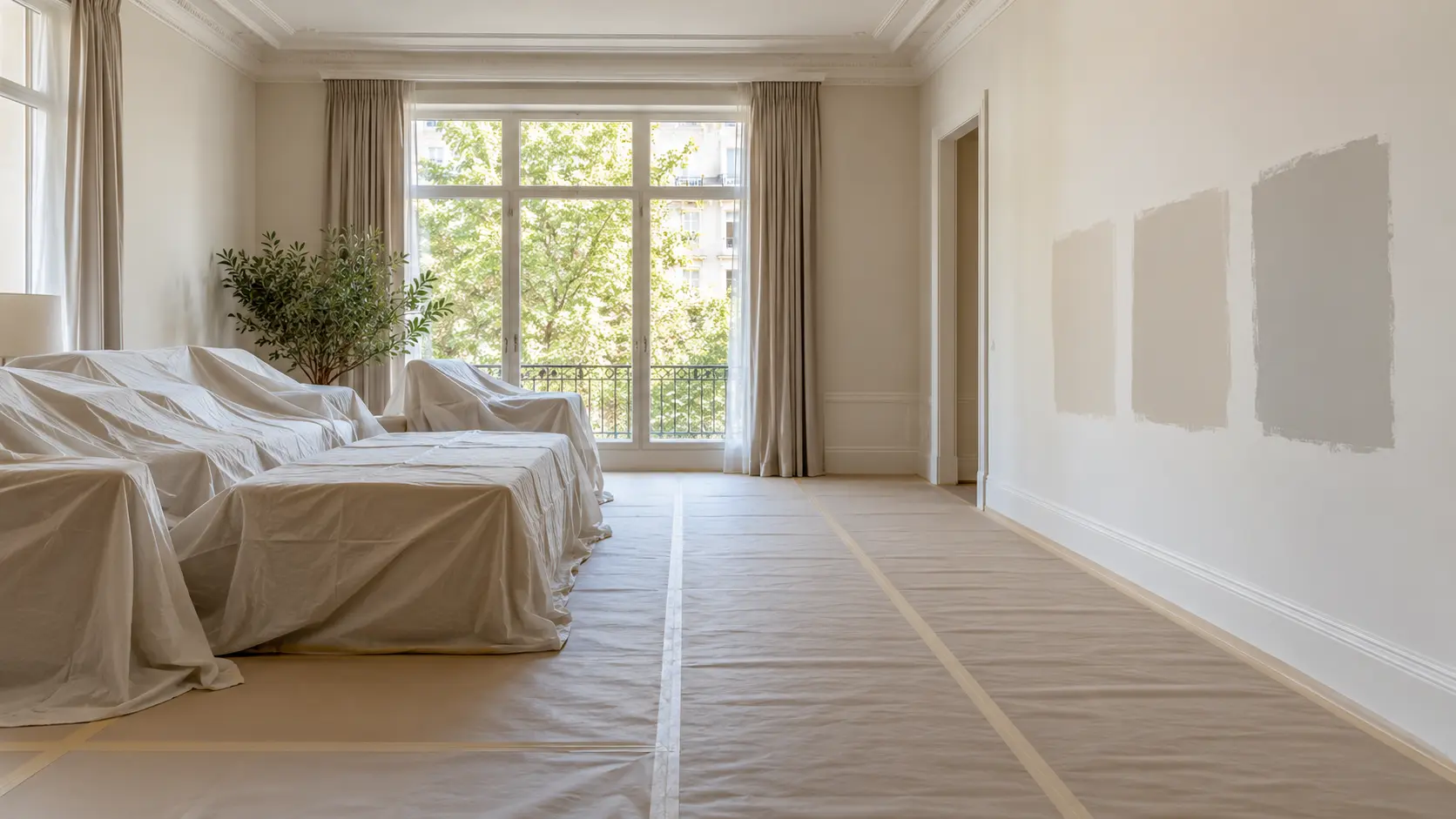
Review colour, sheen and texture together on a representative prepared area, not on a tiny card alone. Observe the sample in daylight and under the apartment's evening lighting, beside fixed flooring, joinery and stone. Mark the selected product, colour reference and sheen in a finish schedule without putting handwritten codes on public-facing imagery. If two rooms receive different lighting or substrates, approve the relevant condition in each. Keep the sample until final review so later batches are compared with an agreed reference.
Plan moves and protection room by room
Create a furniture and contents plan before the painters arrive. Decide what leaves, what moves to the centre, who handles fragile pieces and where removed curtains, art and fittings are stored. Specify floor, skirting, door, joinery, appliance and common-area protection appropriate to the work. Avoid filling the next room with unlabelled piles that block circulation. Photograph significant retained finishes before protection and inspect coverings daily where the household still passes.
Planning example
Consider a planning example, not a completed project. A two-bedroom apartment needs ceilings and walls repainted while one resident works from home. The initial idea is to paint all ceilings first, which would disturb every room at once. The revised plan completes the second bedroom and adjacent corridor as the first contained zone, ventilates and cleans it according to product guidance, then returns it as a temporary work room before the living area starts. The main bedroom follows last. Furniture has a named destination at each stage, and the route to the occupied bathroom remains clear. The overall scope is unchanged, but the resident is not surrounded by unfinished work.
Coordinate building access and neighbours
Confirm management requirements for contractor entry, working hours, parking, lift protection, material delivery, waste removal and common-area cleaning. Keep paint, tools and packaging within approved locations and avoid leaving doors propped open contrary to building controls. The existing building-management guide can frame the questions, but the actual rules must come from the property manager for the planned dates and scope.
Separate drying from completion
Build the programme around preparation, coat intervals, inspection, ventilation and the manufacturer's stated conditions, not just painter attendance. A surface may feel dry before it is ready for washing, furniture contact or normal use. Humidity, temperature, airflow, substrate and product all affect the process. Agree when protection can be removed, when furniture returns and who checks for marks after reinstatement. Do not accelerate drying with unapproved heaters or obstruct building ventilation systems.
Occupied-painting checklist
Issue a simple room sequence and confirm these items before starting.
- Surfaces, repairs and exclusions listed by room
- Selected product, colour, sheen and approved sample
- Manufacturer data and ventilation plan reviewed
- Household sensitivities and occupancy decision recorded
- Furniture, art, curtains and fragile-item responsibilities
- Floor, joinery, appliance and common-area protection
- Safe clean zone and essential circulation route
- Building access, working hours, deliveries and waste rules
- Coat intervals, inspection and return-to-use criteria
- Cleaning, reinstatement and final snag review
Limitations and safety
This planning framework does not determine whether a particular household should remain in place. Product choice, ventilation, existing coatings, extensive sanding, moisture, mould concerns or individual health conditions may require specialist or medical advice and a different occupation plan. Contractors should follow current product safety data, manufacturer instructions and building rules. Any electrical removal, damp diagnosis or work at height belongs with competent personnel using an appropriate safe method.
The useful next step
Ask the contractor to turn the quotation into a one-page room sequence showing preparation, samples, coats, drying, cleaning and furniture moves. Walk that sequence through the apartment with the household and building requirements in hand. Resolve where people, furniture and waste go at every stage, and define the evidence for reopening a room. This makes disruption visible before commencement and gives the team a practical basis for daily coordination instead of moving the problem from one crowded room to another.
Sources & further reading
Make this useful for your project.
A review of your property and priorities can turn general guidance into a defined brief.
Explore Apartment PaintingDiscuss your project